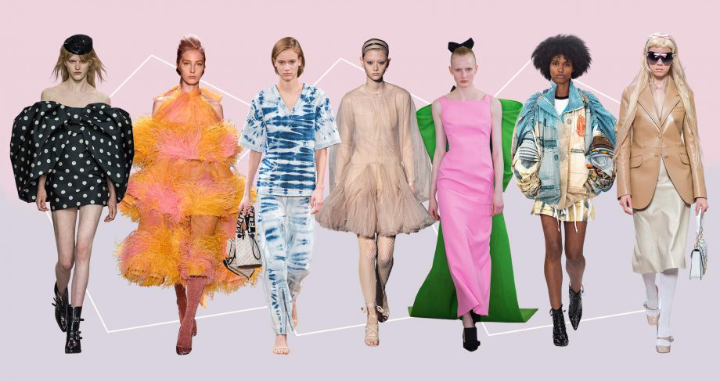
Up to about 75 % of people knows about fashion and no one is new to this explanations Fashion in the sense tends to deal with clothing but ultimately fashion is anything popular in a culture at any given time.
Fashion in the 1950s saw a clear gender divide. While men and boy’s fashion moved towards a more casual day-to-day style, women and girl’s fashion prioritized elegance, formality, and perfectly matched accessories Fashion is defined as “a popular trend, especially in styles of dress and ornament or manners of behavior,” but there is so much more to it than what the definition explains. The items of clothing we chose to wear are often times our most powerful and apparent forms of personal expression. What we choose to wear tells everyone what type of person we are and what we think of ourselves. Fashion shows are an entertaining spectacle unlike any other kind of performance art while boosting the economy and creating jobs for a huge number of people, from the designer who sketches the original concepts, to the outfitter who manufactures the clothing, to the salesperson who sells the garment to us Fashion has really crated a means through which people become socialize
Socialization in terms of fashion
Socialization is a process through which every individual passes in order to adapt to the ways desirable for dealing in the society. In other words, it is a process of learning one’s culture and know how to live within it. A number of people and groups are responsible for socialization of an individual and are called as agents of socialization; they are also known as the variables of socialization owing to their differential impact on each individual. These agents may include family members, friends, neighbours, teachers, the employers, political leaders, business leaders, religious leaders, sports stars, entertainers and the fictional characters that we read about or see on television or in the movies. Thought Economics The Role of Fashion in Human Culture and identity In these exclusive interviews, we speak to Claudia Schiffer (a globally renowned model, icon and businesswoman), Robin Givhan (Pulitzer Prize winning fashion writer and former special correspondent for Newsweek/Daily Beast) and Dov Charney (CEO and Founder of American Apparel). We discuss the very fundamental questions of ‘what’ fashion is, and how it has become such an important part of human culture and identity. Digging deeper, we also look at issues ranging from brand, to sexuality and even the business of fashion itself. “There is an obvious and prominent fact about human beings…” wrote Bryan Turner “…they have bodies and they are bodies…”. In her essay ‘Addressing the Body’; Joanne Entwistle interprets this assertion to suggest that our bodies constitute our environment, making them inseparable from self. She also identifies Turner’s obvious and prominent omission: noting that human bodies are dressed bodies. “Nakedness…” she writes, “…is wholly inappropriate in almost all social situations and, even in situations where much naked flesh is exposed (on the beach, at the swimming-pool, even in the bedroom), the bodies that meet there are likely to be adorned.if only by jewellery, or indeed, even perfume: when asked what she wore to bed, Marilyn Monroe claimed that she wore only Chanel No. 5, illustrating how the body, even without garments, can still be adorned or embellished in some way.
 styleflag.fashion.blog